
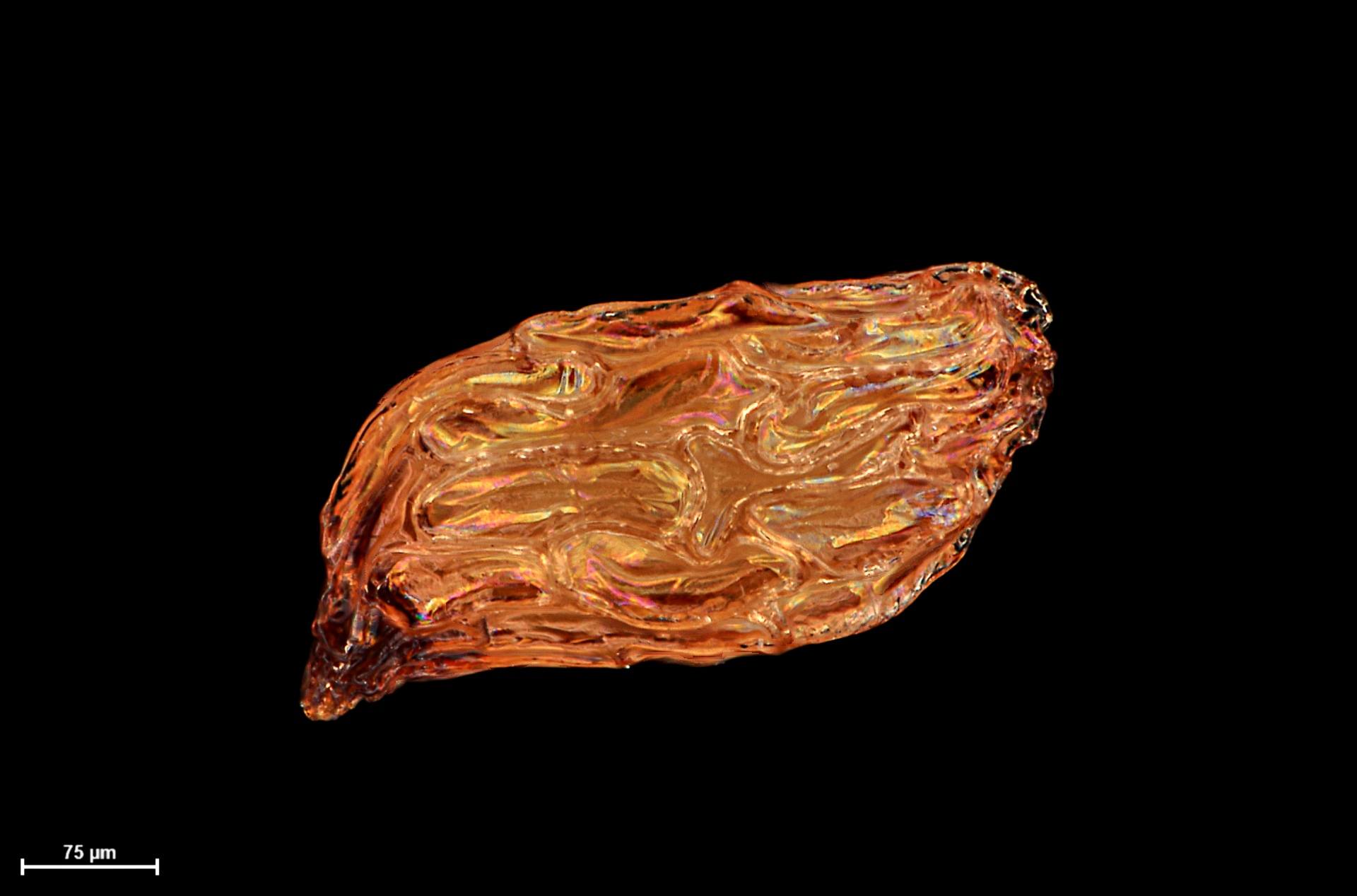
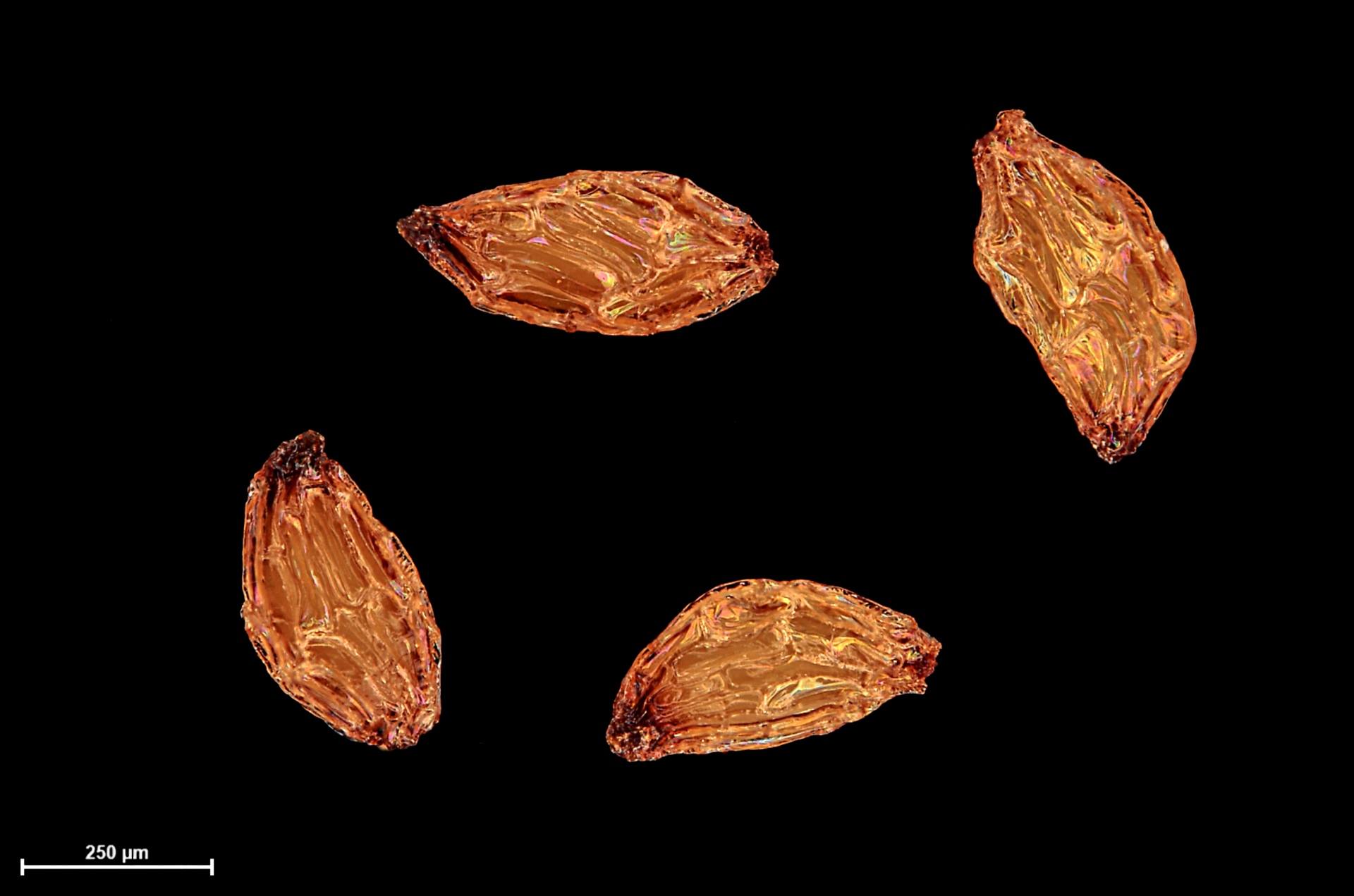
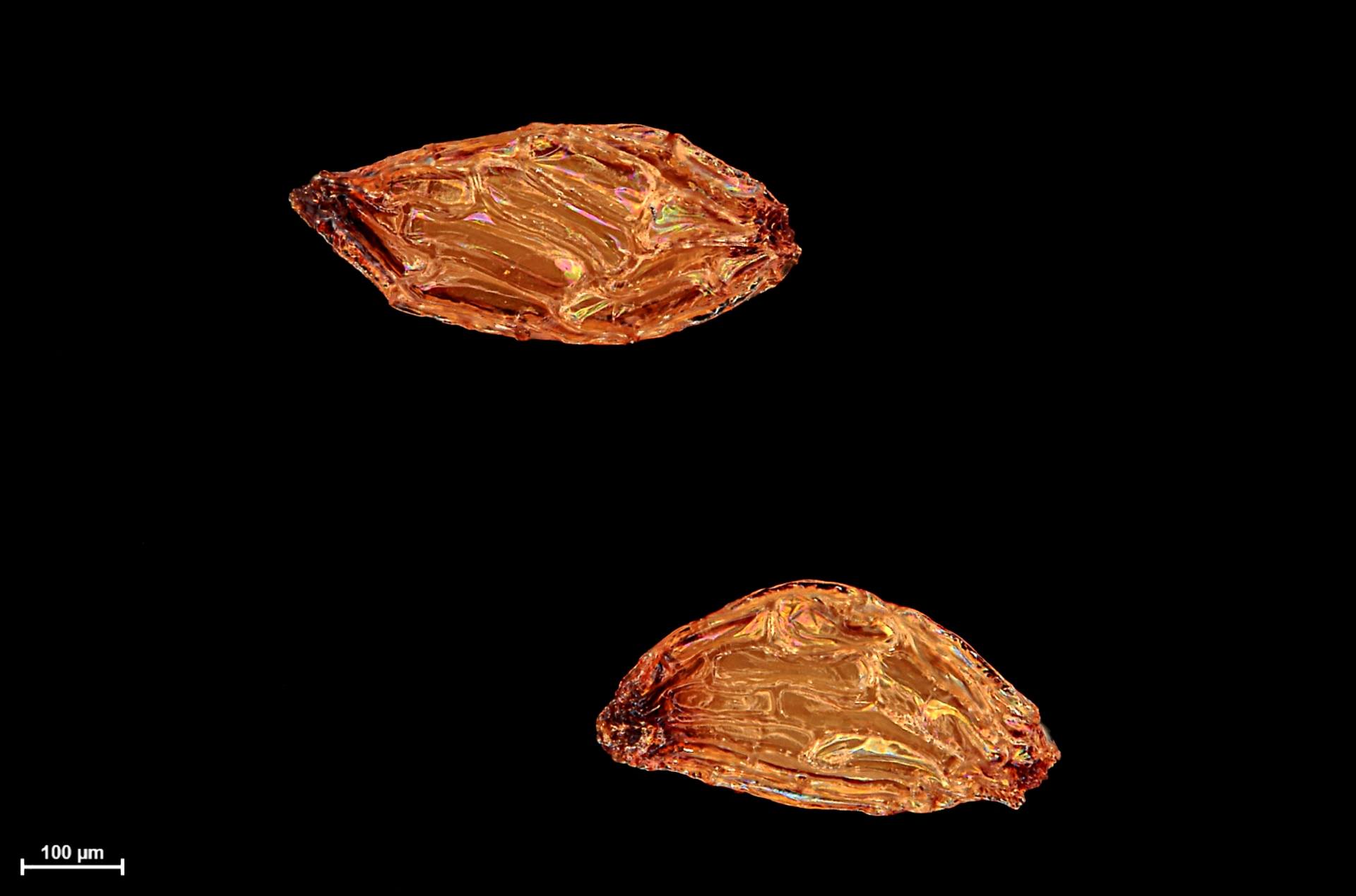
Cyrtandra rivularis is a shrub typically growing between 0.5 and 2 meters tall. The stems are many-branched, with a rounded to angular shape, and are covered with multicellular hairs or can be glabrate. Its leaves are simple and opposite, located on the upper 3–4 nodes, with each pair being unequal and asymmetrical. The leaves are elliptic, sometimes broadly so, measuring 6.3–21 cm in length and 1.8–6.8 cm in width, featuring an acuminate apex and a cuneate to attenuate base. The upper surfaces of the leaves are sparsely to moderately appressed hirtellous, while the lower surfaces are moderately to densely covered with rust-colored, velvety, short-pilose hairs; the leaves are thick and chartaceous with serrulate to occasionally serrate margins. The flowers occur in umbelliform cymes of 2–5, emerging from the leaf axils, and are short-pilose throughout. The peduncles range from 14–32 mm long, with pedicels extending from 10–15 mm, elongating to 15–25 mm during fruiting. The calyx is nearly actinomorphic (radially symmetric), greenish-white, 8–12 mm long, extending up to approximately 15 mm in fruit, with narrowly deltate lobes. The corolla is typically bilabiate and white, with a subcylindrical tube flaring slightly at the mouth and lobes broadly rhombic to rhombic-orbicular. It has five stamens, with the upper two fertile and the others staminodial. The ovary is superior, oblong-ovoid, and 1-celled with parietal placentation. The fruit is a white, fleshy, or firm berry, ovoid in shape, 1.3–2 cm long, and often tipped with a persistent stylar beak. It contains numerous ellipsoid, minute seeds with a 0.4-0.5 mm long reticulate surface. It is found in wet forest habitats between 250-670 meters, with a more typical range of 520-670 meters.
Bean-shaped (Reniform): Resembling the shape of a kidney or bean.
Square or Oblong: Angular shape with all sides more or less equal or longer than wide.
Triangular: Three-sided shape, broadest below the middle.
Elliptic: Rounded at both ends. shaped like an ellipse or oval.
Ovate or Obovate: egg-shaped, broader at one end.
Linear: Extremely long and narrow, with sides usually parallel.
Round: Appears circular, with length and width roughly the same.
Cardioid (Heart-Shaped): One edge has a prominent double curve into two lobes.
Cylindrical: A cylinder with parallel sides and a circular cross-section.
Discoid: Resembling a disc or plate with two relatively flat surfaces.
Fusiform: Spindle-shaped, tapering at both ends.
Globose: Spherical.
Lenticular: Resembling a lens with two convex surfaces.
Ovoid: Egg-shaped.
Plano-convex: Having a flat ventral (planar) surface and a curved dorsal (convex) surface.
Polygonal: Having more than three flat faces meeting at angles.
Sectoroid: Resembling a segment of an orange with two relatively flat faces and one curved face.
Subglobose/ellipsoid: Inflated shape but less than spherical.
Trigonous: Having three faces that meet at a distinct angle; triangular in cross-section.
Endangered species (E) are species that are so rare they’re in danger of becoming extinct.
Threatened species (T) are species that are likely to become endangered within the foreseeable future throughout all or a significant portion of their range.
Species of Concern (SOC) are species about which there are some concerns regarding status and threats, but insufficient information is available to list the species under the Endangered Species Act (ESA).
Plant Extinction Prevention (PEP) is a state status for rare plants that focuses its efforts on species that have fewer than 50 remaining wild individuals.
Orthodox seeds (desiccation-tolerant): can be dried to an internal seed moisture of less than 12% water and stored at freezing temperatures.
Intermediate seeds (temperature-sensitive) tend to age faster than orthodox seeds and may have only a 5-year lifespan when stored at -20°C. They are recommended for storage at 5°C.
Recalcitrant seeds (desiccation-sensitive): cannot be stored in a conventional freezer as they cannot survive after drying and/or freezing at -20°C. They are recommended for cryopreservation storage.