
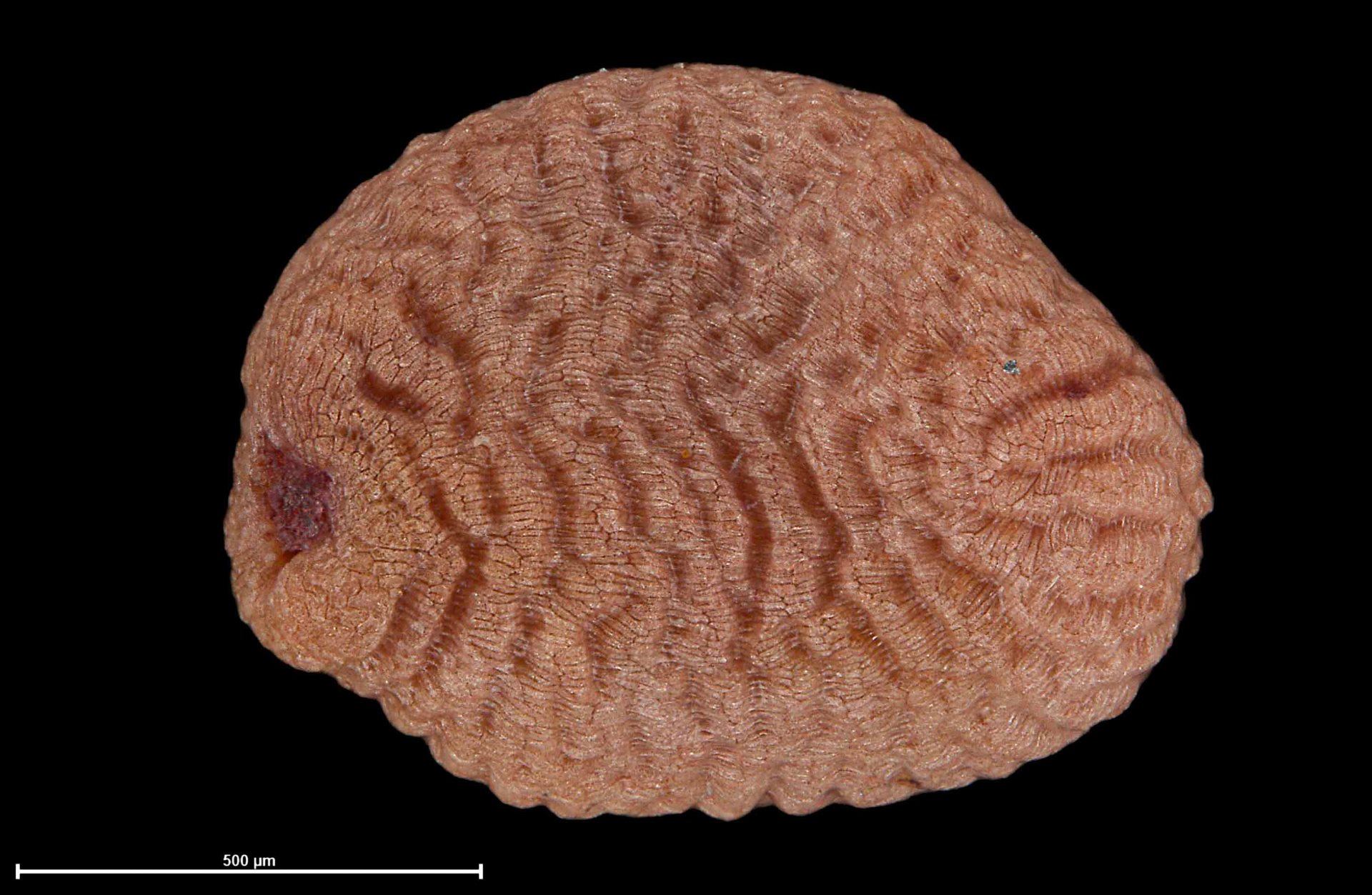

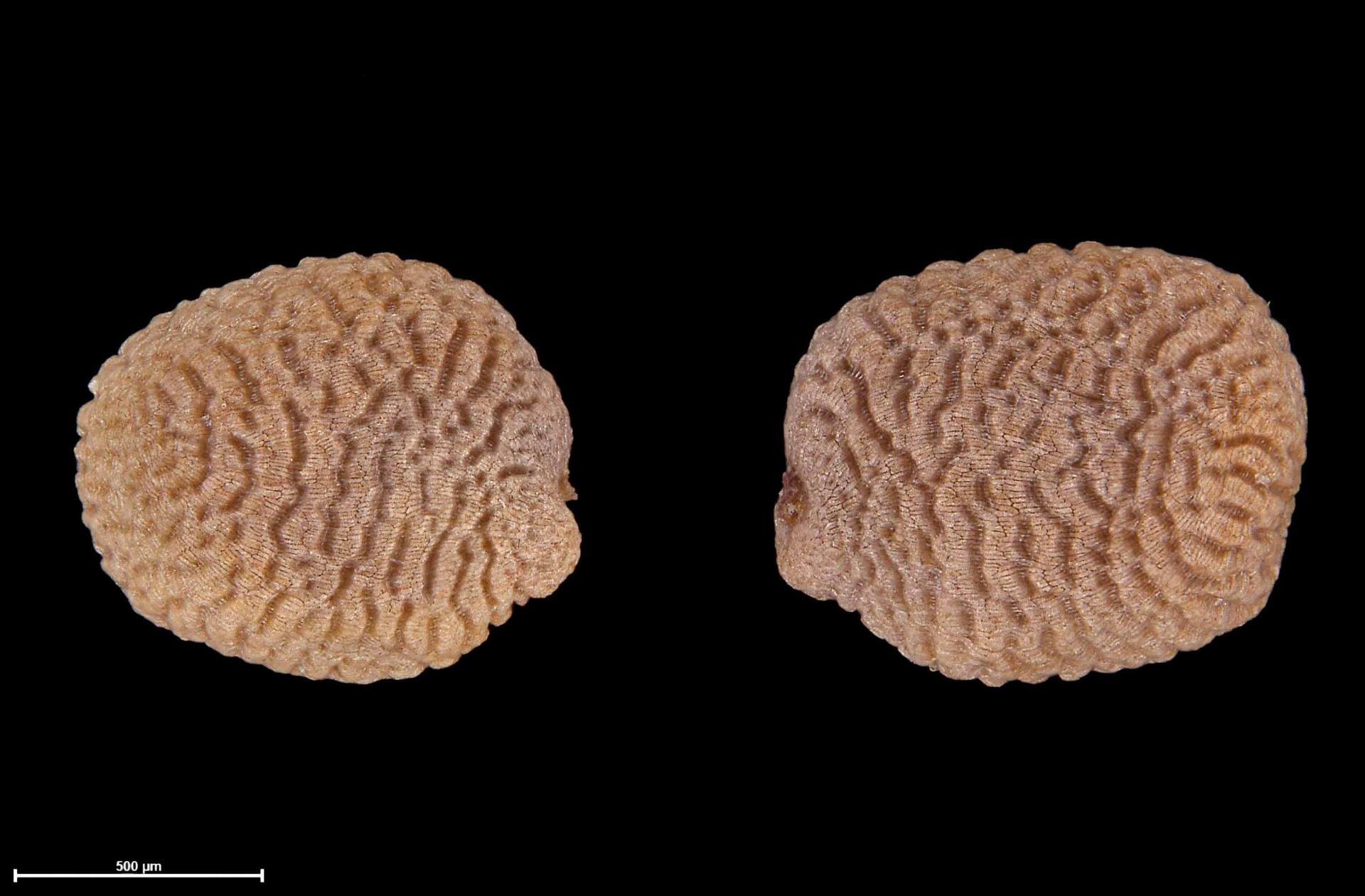
Delissea kauaiensis is a treelet or occasionally a tree, reaching 1.2–4.5 meters in height. It has erect or ascending stems, 4.5–23 mm in diameter, typically unbranched, light gray or brown, with numerous helically arranged leaf scars and white, viscous latex. The leaves are simple and alternate, forming a dense apical rosette. Blades are ovate or lanceolate, 5.7–19.0 cm long and 2–11 cm wide, fleshy when fresh and membranous to chartaceous when dry, with coarsely biserrate or crenate margins. Petioles are cylindrical, up to 15 cm long. Flowers are arranged in several axillary, racemose inflorescences, each 5–20 flowered. The hypanthium is obovoid or ellipsoid. Flowers are bisexual, protandrous, and epigynous, with a calyx having small lobes and a corolla tube 16–30 mm long. Stamens are syngenesious, with a filament tube 17–24 mm long and a glabrous or sparsely pubescent anther tube. The fruit is a small purple, globose berry, 5–12 mm in diameter, with numerous small, grayish-white, compressed, transversely rugose seeds. It typically grows in open wet forests on cliffs, steep slopes, and valley floors between 90–1,160 meters.
Bean-shaped (Reniform): Resembling the shape of a kidney or bean.
Square or Oblong: Angular shape with all sides more or less equal or longer than wide.
Triangular: Three-sided shape, broadest below the middle.
Elliptic: Rounded at both ends. shaped like an ellipse or oval.
Ovate or Obovate: egg-shaped, broader at one end.
Linear: Extremely long and narrow, with sides usually parallel.
Round: Appears circular, with length and width roughly the same.
Cardioid (Heart-Shaped): One edge has a prominent double curve into two lobes.
Cylindrical: A cylinder with parallel sides and a circular cross-section.
Discoid: Resembling a disc or plate with two relatively flat surfaces.
Fusiform: Spindle-shaped, tapering at both ends.
Globose: Spherical.
Lenticular: Resembling a lens with two convex surfaces.
Ovoid: Egg-shaped.
Plano-convex: Having a flat ventral (planar) surface and a curved dorsal (convex) surface.
Polygonal: Having more than three flat faces meeting at angles.
Sectoroid: Resembling a segment of an orange with two relatively flat faces and one curved face.
Subglobose/ellipsoid: Inflated shape but less than spherical.
Trigonous: Having three faces that meet at a distinct angle; triangular in cross-section.
Endangered species (E) are species that are so rare they’re in danger of becoming extinct.
Threatened species (T) are species that are likely to become endangered within the foreseeable future throughout all or a significant portion of their range.
Species of Concern (SOC) are species about which there are some concerns regarding status and threats, but insufficient information is available to list the species under the Endangered Species Act (ESA).
Plant Extinction Prevention (PEP) is a state status for rare plants that focuses its efforts on species that have fewer than 50 remaining wild individuals.
Orthodox seeds (desiccation-tolerant): can be dried to an internal seed moisture of less than 12% water and stored at freezing temperatures.
Intermediate seeds (temperature-sensitive) tend to age faster than orthodox seeds and may have only a 5-year lifespan when stored at -20°C. They are recommended for storage at 5°C.
Recalcitrant seeds (desiccation-sensitive): cannot be stored in a conventional freezer as they cannot survive after drying and/or freezing at -20°C. They are recommended for cryopreservation storage.