
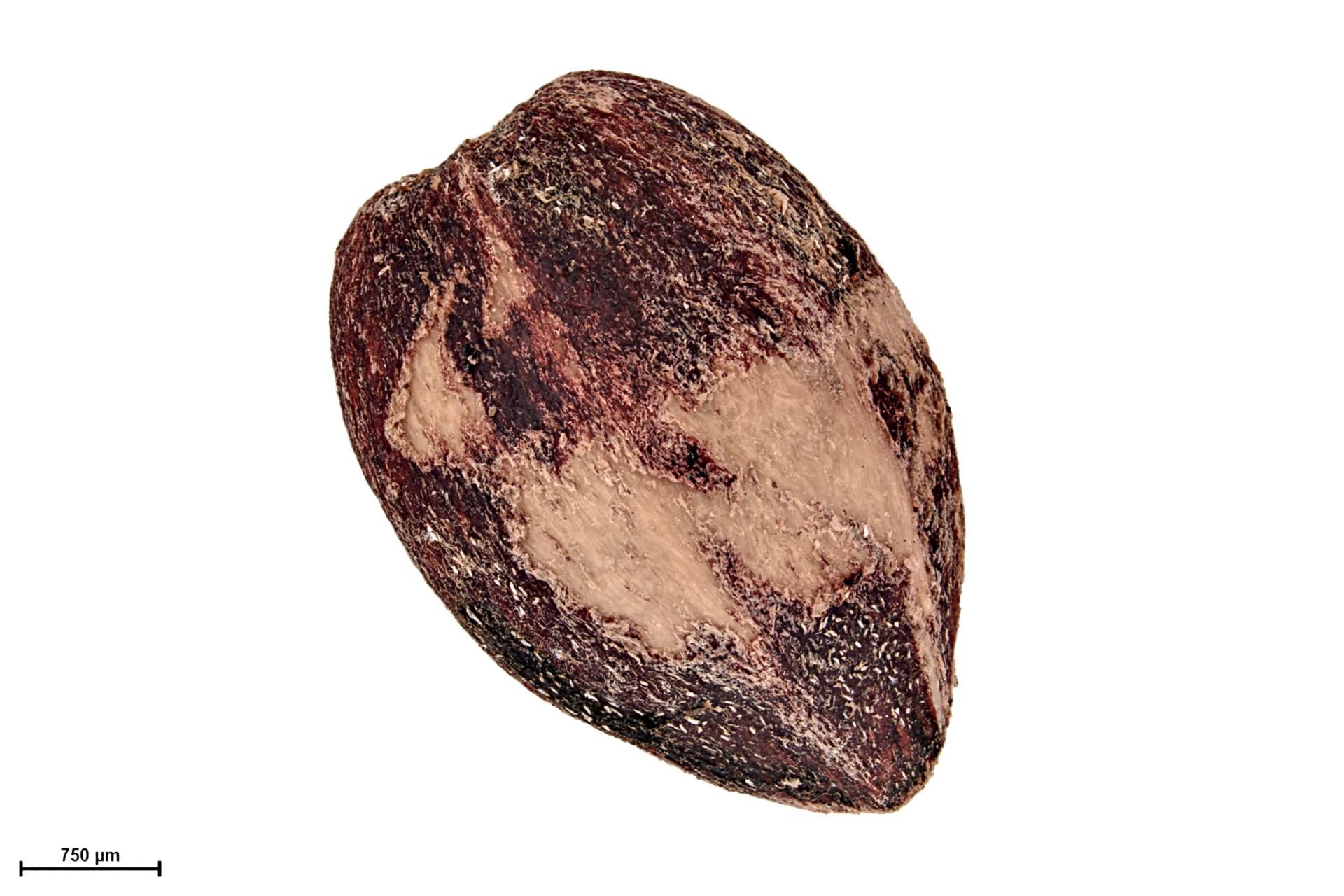
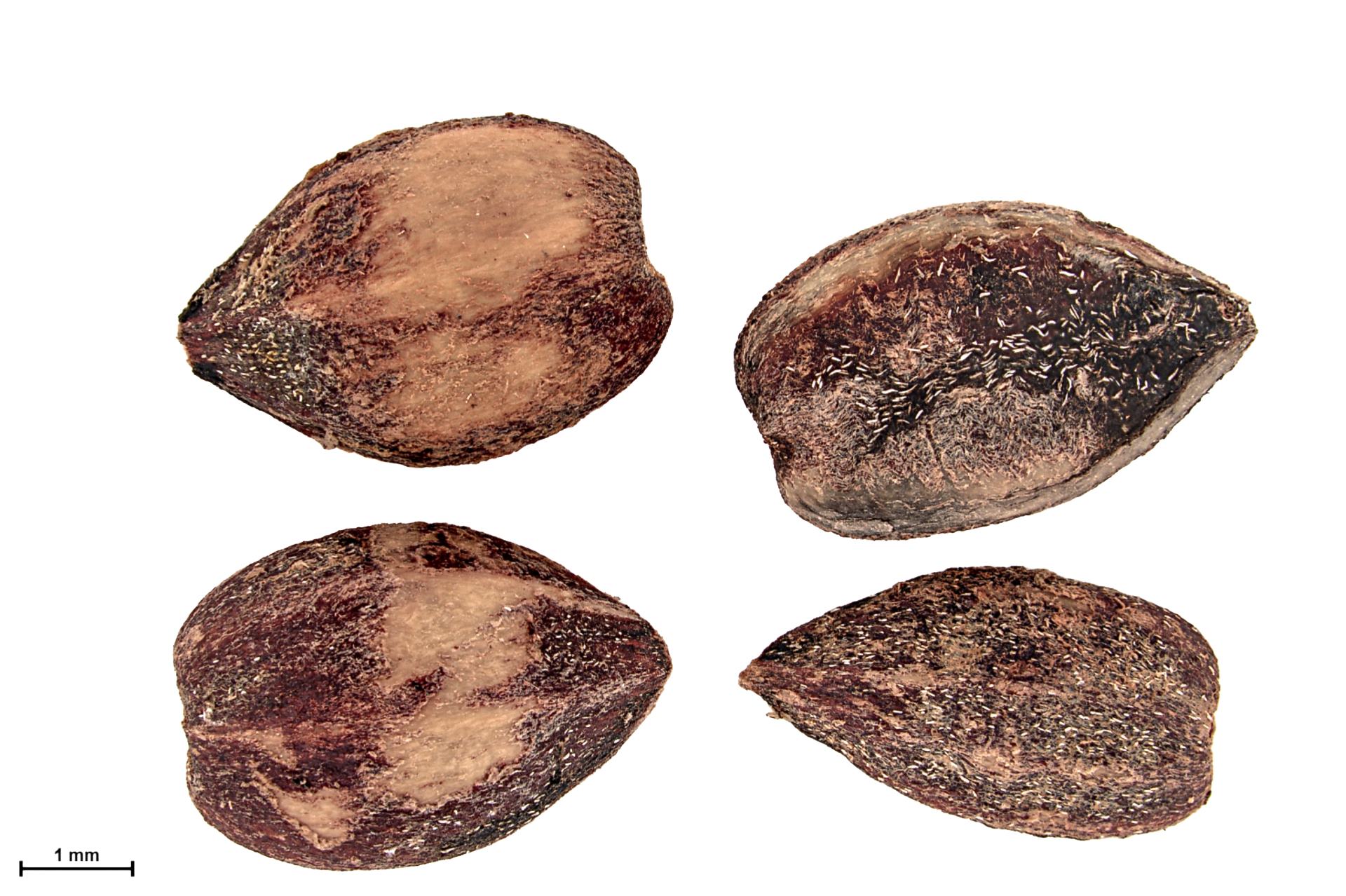
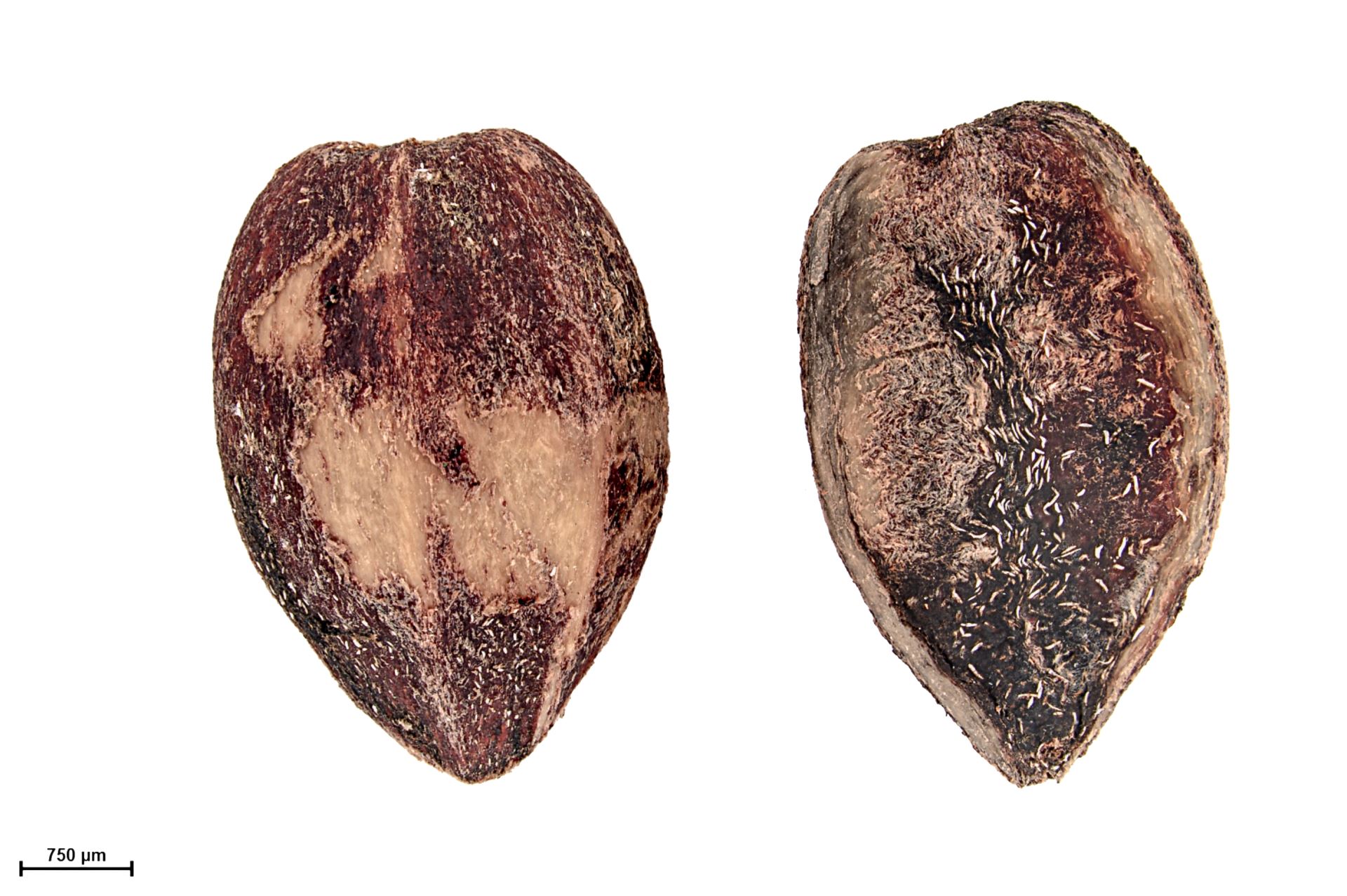
Psychotria kaduana is a tree or shrub that grows to a height of 2–4(–8) meters. The branches can be grayish, yellowish, or dark brown. The leaves are simple and opposite. The blades are obovate to oblanceolate or elliptic, measuring 2.5–14.5 cm long and 0.9–6 cm wide. The leaf apex can be rounded, obtuse, or acute, often with an abrupt, short, but wide point. The base is cuneate or acuminate, occasionally attenuate, or rarely rounded. The lower surfaces may sometimes be puberulent; the blades are membranous, chartaceous, or coriaceous, occasionally with small domatia less than 0.5 mm long in vein axils. The margins are entire. There are 6–14 pairs of lateral veins, and the tertiary veins are often conspicuously reticulate. Marginal ribs may be moderately, weakly, or not developed at all. The leaves are usually glabrous, subsessile, or with slender petioles up to 2.5 cm long. Stipules are broadly obovate, up to 8 mm long. The flowers are arranged in inflorescences with one central axis and 2–3 nodes of verticillate branching, often pendent, at least in fruit. The branches are 0.3–5.5 mm long and often branched again, with the ultimate branches terminating in a 3-flowered cymule. The peduncles are (0.2–)1.6–6.5(–15.5) cm long, with all branches subtended by short bracts that are wider than long and caducous. These flowers are insect-pollinated, functionally unisexual, 4–5(6)-merous, and usually heterostylous. The calyx is 4-6-lobed, 1.5–2 mm long at anthesis, with the tube usually shorter than the hypanthium, slightly expanded or occasionally flared toward the apex, apex truncate, or with very shallow lobes, glabrous or occasionally pubescent. The corolla is white, 4-6-lobed, with a tube ca. 1.5 mm long at anthesis, somewhat expanded toward the apex, usually glabrous, with the throat sometimes pubescent. The lobes are relatively thin, ovate to nearly subulate, 1–3 mm long, and reflexed at anthesis. A nectary disk is present at the apex of the ovary. The stamens are as many as and alternate with the corolla lobes. In staminate flowers, the filaments are ca. 1 mm long at anthesis, usually inserted on the corolla tube or throat. The anthers are attached at the base, ovate-oblong, 0.8–1.2 mm long, exserted at anthesis in functionally staminate flowers, dithecal, and open by longitudinal slits. Staminodes are present in pistillate flowers. The ovary is inferior, occasionally partly so, or rarely superior, turbinate, 1.5–2 mm long, and 2-celled with basal placentation. There is one ovule per cell, erect and anatropous. The style is terminal, slender, 1.5–3 mm long, with two divaricate stigmas ca. 1 mm long, appressed and smaller in staminate flowers, usually pubescent, and dry or occasionally wet. The fruit is drupaceous, orange, pyriform, or ellipsoid, measuring 5–15 mm long. It often has a narrow disk protruding prominently from within the remnant calyx. The pyrenes are 1-2(-4), hemispherical in cross-section, and the endocarp is usually thick and hard. There is one seed per pyrene, usually conforming to the form of the pyrene. The seed coat is thin with a T-shaped invagination on the ventral surface. The endosperm is otherwise not ruminate or carnose, with the embryo small with flat, thin cotyledons. The seeds have well-developed oily endosperm or occasionally scanty or absent endosperm. It occurs in mesic valleys, mesic forests, and wet forests between (15–)180–1,220 meters.
Bean-shaped (Reniform): Resembling the shape of a kidney or bean.
Square or Oblong: Angular shape with all sides more or less equal or longer than wide.
Triangular: Three-sided shape, broadest below the middle.
Elliptic: Rounded at both ends. shaped like an ellipse or oval.
Ovate or Obovate: egg-shaped, broader at one end.
Linear: Extremely long and narrow, with sides usually parallel.
Round: Appears circular, with length and width roughly the same.
Cardioid (Heart-Shaped): One edge has a prominent double curve into two lobes.
Cylindrical: A cylinder with parallel sides and a circular cross-section.
Discoid: Resembling a disc or plate with two relatively flat surfaces.
Fusiform: Spindle-shaped, tapering at both ends.
Globose: Spherical.
Lenticular: Resembling a lens with two convex surfaces.
Ovoid: Egg-shaped.
Plano-convex: Having a flat ventral (planar) surface and a curved dorsal (convex) surface.
Polygonal: Having more than three flat faces meeting at angles.
Sectoroid: Resembling a segment of an orange with two relatively flat faces and one curved face.
Subglobose/ellipsoid: Inflated shape but less than spherical.
Trigonous: Having three faces that meet at a distinct angle; triangular in cross-section.
Endangered species (E) are species that are so rare they’re in danger of becoming extinct.
Threatened species (T) are species that are likely to become endangered within the foreseeable future throughout all or a significant portion of their range.
Species of Concern (SOC) are species about which there are some concerns regarding status and threats, but insufficient information is available to list the species under the Endangered Species Act (ESA).
Plant Extinction Prevention (PEP) is a state status for rare plants that focuses its efforts on species that have fewer than 50 remaining wild individuals.
Orthodox seeds (desiccation-tolerant): can be dried to an internal seed moisture of less than 12% water and stored at freezing temperatures.
Intermediate seeds (temperature-sensitive) tend to age faster than orthodox seeds and may have only a 5-year lifespan when stored at -20°C. They are recommended for storage at 5°C.
Recalcitrant seeds (desiccation-sensitive): cannot be stored in a conventional freezer as they cannot survive after drying and/or freezing at -20°C. They are recommended for cryopreservation storage.